AR in Real Estate: The Game Changer You Can’t Ignore
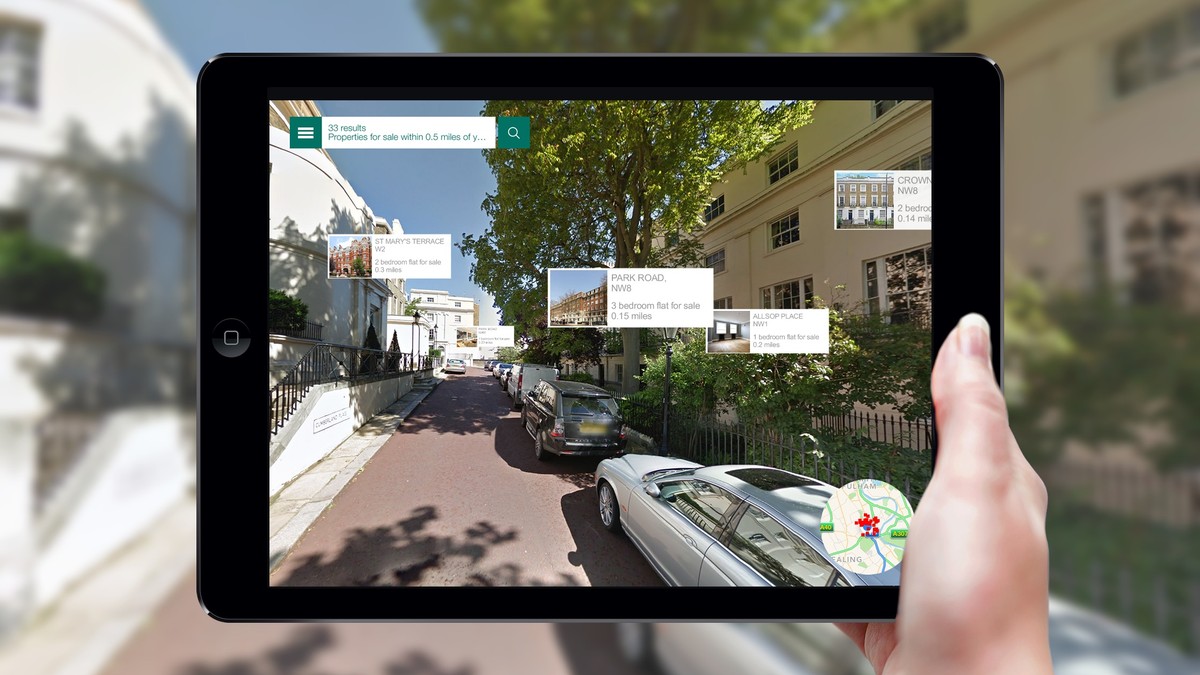
Table of contents

Table of contents
Ever tried imagining your dream home from a floor plan?
It’s like trying to picture a meal from a recipe—you kinda get it, but it’s not the same as tasting it.
That’s where Augmented Reality (AR) in real estate flips the script.
It lets buyers see, feel, and experience properties before they even step inside.
And for agents? It’s a sales weapon that turns “maybes” into “where do I sign?”
Augmented Reality (AR) overlays digital elements onto the real world using your phone, tablet, or AR glasses.
In real estate, this means:
For buyers, it means fewer disappointments and more confidence. For sellers and agents, it means faster deals and higher engagement.
No more relying on vague descriptions. AR lets buyers see exactly what they’re getting—before making the trip.
Instead of spending weekends hopping between houses, buyers can shortlist only the best ones using AR walkthroughs.
Ever walked into a house that looked nothing like the listing photos?
With AR, what you see is what you get. No surprises, no wasted trips.
Agents using AR have reported higher conversion rates because buyers are already emotionally invested before they visit.
International buyers, investors, or anyone relocating can view properties from anywhere in the world without a physical visit.
Listings with AR features stand out. Interactive 3D experiences get higher engagement rates, making properties sell faster.
Traditional staging costs hundreds or even thousands of pounds. With AR, sellers can digitally furnish a home at a fraction of the cost.
IKEA’s AR-powered app lets users place virtual furniture in their real homes.
Now imagine this tech applied to real estate.
Buyers can see:
It’s not just cool—it’s a deal closer.
Another great example is Zillow’s 3D Home Tours, where buyers can navigate homes virtually as if they were there in person.
Want to try it yourself? Here are some free tools:
| Feature | AR (Augmented Reality) | VR (Virtual Reality) |
|---|---|---|
| Requires Headset? | No | Yes |
| Overlays Digital on Real World? | Yes | No |
| Fully Immersive? | No | Yes |
| Best For | Enhancing physical properties | Fully virtual property tours |
Both have their place, but AR is more accessible, cost-effective, and practical for real estate.
Augmented Reality isn’t just changing real estate—it’s revolutionising architecture too.
Here’s how AR is making waves in the design and construction world:
Gone are the days of relying on 2D blueprints and static 3D models. AR allows architects and clients to walk through a building before it’s built. This helps in:
With AR-powered smart helmets and glasses, construction workers can see blueprints overlaid onto the actual site, reducing errors and improving precision. This leads to:
Clients don’t need to imagine the final look from sketches. AR lets them:
Governments and urban developers use AR to plan cities efficiently by:
AR helps architects and developers avoid waste by testing materials and layouts digitally before physical construction begins. This leads to:
No, most AR tools work on smartphones or tablets. For an even better experience, AR glasses can be used.
Basic AR features are free with apps like Morpholio AR SketchWalk. Advanced setups (like custom AR models) can range from a few hundred to thousands of pounds.
Yes. AR reduces errors, improves precision, and enhances collaboration, leading to faster project completion.
Yes. Listings with AR features get more engagement, higher conversions, and reduced sales cycles.
AR is more practical and accessible for real-world applications. VR is useful for fully immersive experiences but requires more equipment.
AR helps urban developers simulate infrastructure projects, test environmental impact, and optimise city layouts before construction begins.
Adoption is growing, but costs and lack of awareness slow it down. However, as tech advances, it’s becoming more common.
Absolutely. AR helps businesses visualize office layouts, retail store designs, and even warehouse storage optimization before committing to a space.
Tech trends come and go, but AR in real estate & architecture is only growing.
Soon, we’ll see:
If you’re in real estate & architecture and not leveraging AR, you’re leaving money on the table.
AR is not the future—it’s the present.
And those who use it? They win the real estate game.