What You Should Know About AR in Automotive
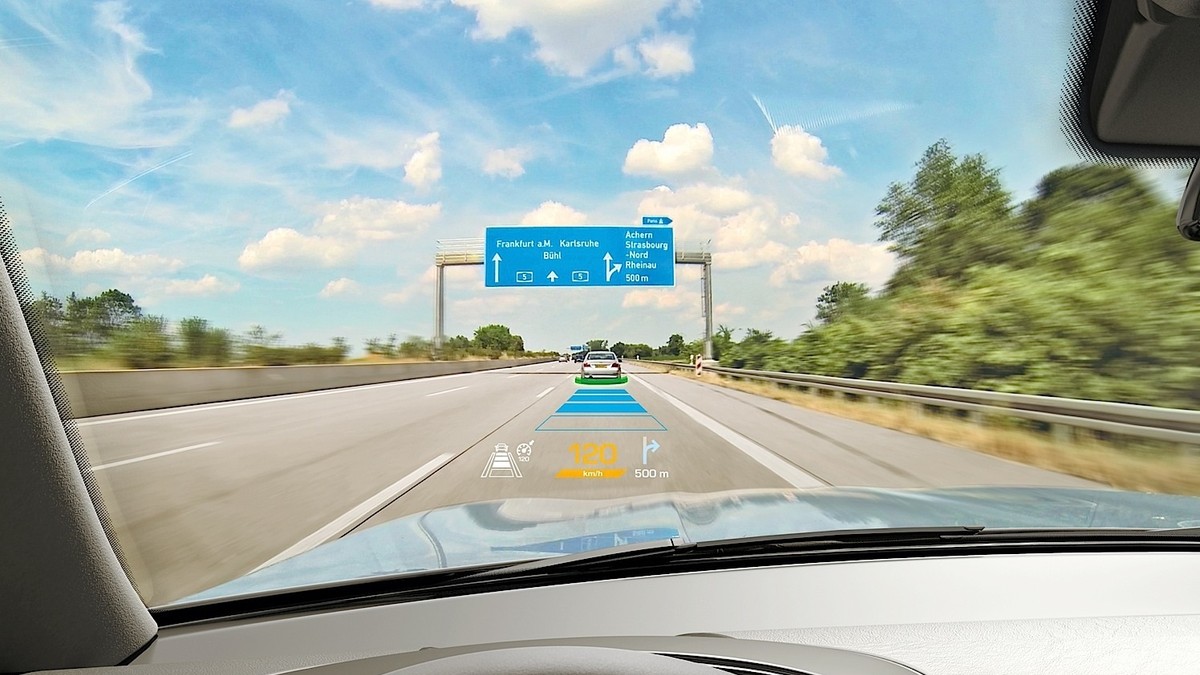
Table of contents

Table of contents
Let me guess…
You’ve seen futuristic concept cars with glowing windscreens, AR overlays, and AI copilots.
Looks cool. But you’re thinking:
“That stuff’s probably for concept shows or Elon’s next tweet.”
Wrong.
AR in automotive is already being used by brands you know—in factories, showrooms, and even your own driveway.
Let me show you exactly how it works.
You know when you use Snapchat or Instagram filters that put stuff over your face?
That’s AR.
Now imagine that, but on your windscreen, dashboard, or mobile screen… showing real, useful car data.
You’re not leaving the real world—you’re adding smart layers to it.
Let’s say you’re test driving a car.
Instead of a boring screen on the dash, a live arrow floats on the road ahead, showing where to turn.
It even shows hazards, speed limits, or a lane change before you need it.
That’s not “future tech.”
That’s what Mercedes-Benz MBUX AR Navigation already does today.
Here’s where it gets real:
It’s not optional anymore.
AR is a cheat code.
The only question is whether you’re using it or ignoring it.
What it does:
Projects info—speed, turn directions, warnings—onto the windscreen.
Why it matters:
Example:
Mazda 3 and BMW Series 5 both offer AR HUDs with live road data.
Even Hyundai Kona has a scaled-down version.
What it does:
Maps and arrows show on top of the real road, not just on a screen.
Why it matters:
Example:
MBUX by Mercedes combines front camera + AR overlay.
It even shows building names and house numbers.
What it does:
Shows step-by-step repair instructions on the real engine.
Why it matters:
Example:
Porsche’s “Tech Live Look” uses AR glasses so remote experts can literally guide you by drawing on your screen in real time.
What it does:
Customers use their phone to project a life-sized car in their driveway or living room.
Why it matters:
Example:
MG Motors India launched an AR showroom where users check out interiors, trims, even engine specs—straight from their phones.
Try it here: MG AR Experience
Quick fire comparison:
| Use Case | AR | VR |
|---|---|---|
| In-car Navigation | ✅ | ❌ |
| Repair Guidance | ✅ | ❌ |
| Customer Showrooms | ✅ | ✅ |
| Full Immersion (Training/Design) | ❌ | ✅ |
| Real-Time Driving Help | ✅ | ❌ |
| Brand | AR Use Case |
|---|---|
| Jaguar Land Rover | AR windscreen with 3D hazard detection & safety prompts |
| Hyundai | AR manual shows engine components on your phone |
| Porsche | AR glasses for remote diagnostics |
| Volkswagen | AR glasses for assembly line instructions |
| Audi | AR HUD with lane-level navigation |
| Toyota | AR apps for customer education & feature walk-through |
🧠 Mind-blowing fact:
Volkswagen cut manual training time by 30% using AR assembly overlays in their factories.
Wanna get your hands dirty?
These tools help you build or demo AR—even if you’re not a coder:
| Tool | What It Does | Link |
|---|---|---|
| 8thWall | Browser-based AR experiences | Visit |
| Zappar | Drag & drop AR builder | Visit |
| Unity + Vuforia | Full AR dev kit for pros | Visit |
| BlippAR | Interactive AR for sales/demo | Visit |
| Sketchfab | AR-compatible 3D model viewer | Visit |
Example:
Ford’s Gravity Sketch lets design teams sketch cars in 3D space using AR tools.
Cuts weeks from early-stage development.
Example:
Volvo cut downtime in their Belgium plant by using AR to highlight potential production faults before they happen.
Example:
Tesla uses AR to preview their car interiors via mobile app.
This is where it gets wild:
This tech is already in R&D labs at Tesla, Apple Car Project, and Toyota.
We’re not decades away. We’re 2-5 years out.
Yes – through third-party apps, head-up displays, or phones.
For example, Hudway turns your phone into an AR HUD.
Use mobile apps from MG, Hyundai, or even Google Maps’ AR mode.
AR HUD interacts with the environment.
Normal HUD just shows static data like speed or RPM.
It varies.
1Built-in AR HUDs can cost £1,000–£3,000 extra depending on the car model.
Aftermarket options (like Hudway or Navdy) start around £200.
But here’s the kicker:
For manufacturers, the real cost is in development, sensors, and software integration—not just the display.
Not anymore.
It started that way, sure. But now it helps with:
Safer navigation
Live repair guidance
Driver training
Real-time hazard detection
If it saves lives or time—it’s not a gimmick.
Yes—if the system is built well.
Premium AR systems like those in Mercedes MBUX or Audi A8 use infrared + smart light sensors to adjust for rain, fog, or night conditions.
Cheaper models? Not so much.
Nope.
If you can drive, you can use AR HUDs or apps.
But if you’re working in repair or manufacturing, you might need platform-specific training.
Example: Porsche techs go through a crash course in using AR glasses for remote diagnostics.
Here’s the power list:
Mercedes-Benz – MBUX AR Nav is top-tier.
Porsche – Live AR support for service techs.
Jaguar Land Rover – Working on AR-assisted driving systems.
Hyundai/Kia – AR manuals + low-cost HUDs.
MG Motors – Pioneering virtual showrooms in India.
Tesla? Not yet AR-focused. They’re still leaning hard into AI and screen-based UX.
That’s exactly the point of AR—it makes driving safer, not riskier.
As long as:
The UI is clean
You’re not overloaded with visuals
It’s integrated with sensors and real-time data
You’re good.
Most modern smartphones do:
iPhones (XR and up)
Android (ARCore supported models)
Just check the app store descriptions. If you’ve bought a phone in the last 3–4 years, you’re probably covered.
👉 AR in Medical Education
👉 AR in Business & Marketing
👉 AR in Gaming & Entertainment